Operator
Trainee workload, control behavior, physiological context, attention markers, recovery patterns, and blocked reasons stay tied to review evidence.
AVIATION + TRAINING // INSTRUCTOR EVIDENCE
Machine Nerve connects simulator telemetry, control behavior, operator context, ATC/audio events, instructor evidence, feedback, and outcomes into one replayable training record.
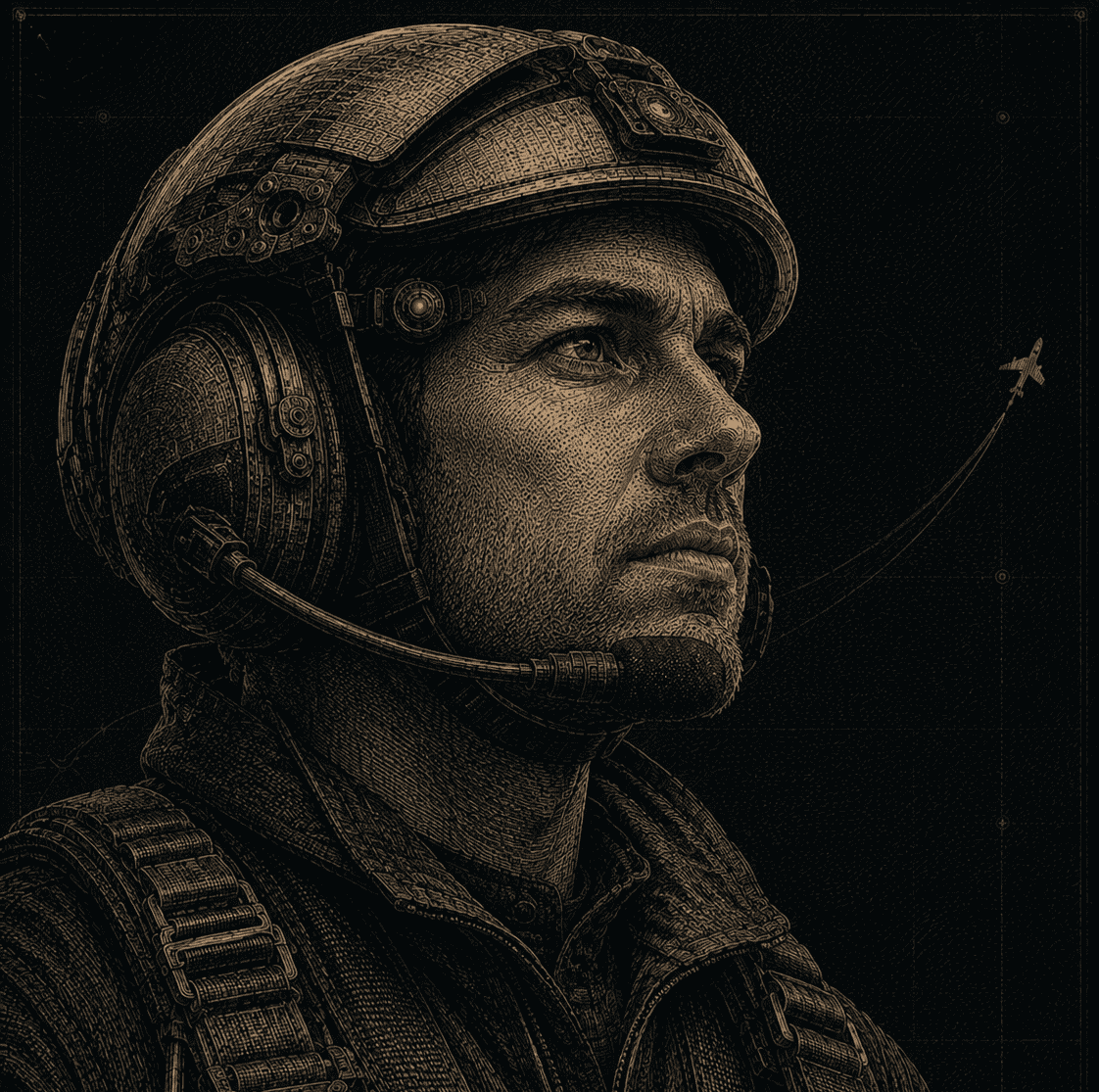
Trainee workload, control behavior, physiological context, attention markers, recovery patterns, and blocked reasons stay tied to review evidence.
Simulator state, control inputs, aircraft variables, scenario events, feedback outputs, adapter health, and timing remain visible as source data.
Training phase, scenario changes, weather or visibility context, communications, instructor events, and task pressure explain what shaped the outcome.
Capability Proof
Organize scenario state, controls, event markers, feedback history, and task outcomes for debrief.
Frame workload, physiological cost, recovery, and performance stability as training context with explicit quality boundaries.
Support instructor review with replayable evidence, cue history, and blocked-action reasons instead of replacing instructor judgment.
Keep adaptation concepts bounded, reversible, inspectable, and constrained by policy, human review, and system-specific approval.
Link debrief conclusions back to replayable traces, blocked reasons, scenario history, feedback paths, and evidence export direction.
Carry quality, confidence, and timing state before a signal influences interpretation.
The simulator already knows what happened in the scenario. Machine Nerve adds what the operator was experiencing as it happened, then connects that context to feedback and outcome measurement. The platform treats simulator state, controls, operator signals, audio events, instructor context, scenario context, feedback history, and after-action evidence as one review path for synthetic training.
This page is about training support and research direction. It is not a claim of certified aviation-training integration, autonomous simulator mutation, or validated pilot-readiness prediction.
An effective debrief should preserve task outcome, scenario context, control history, communication load, workload context, feedback history, and the operator evidence around the moment that mattered. The goal is not a black-box score. The goal is a reviewable record an instructor can question.
That record should show source timing, signal freshness, confidence, protected phase, adapter health, and why a feedback or adaptation path was blocked. A suppressed action can be as important as an action that fired.
Machine Nerve can support adaptation research language, but public claims remain bounded. Any scenario change, feedback loop, or training recommendation must stay tied to policy, traceability, source quality, protected training phases, adapter health, evidence persistence, and human review.
The first public reference should stay intentionally narrow: bounded simulator adaptation concepts such as visibility, weather, or scenario changes where write-back validation exists for the specific setup.
Aviation training is the bridge between motorsports proof and defense-relevant readiness research. The same shared-state substrate can support instructors, simulation operators, human factors teams, and program leads who need to reduce wasted simulator time, understand training pressure, and measure performance cost, not just task completion.
Designed for governed research, training support, instructor review, and evidence capture. Not a certified aviation-training integration, not an autonomous simulator mutation claim, and not a validated pilot-readiness prediction claim.
Read What Is Human-Machine Performance Intelligence? for the broader signal-layer thesis.
Questions And Answers
These are the questions teams usually ask when they first map Machine Nerve to their environment.
Machine Nerve is a performance intelligence layer for simulator-based training. It connects simulator telemetry, control behavior, operator context, audio or ATC events, instructor context, feedback, and outcomes into a replayable shared state record.
A simulator can show what happened in the scenario. Machine Nerve adds the signal path around the trainee: what the operator did, what the scenario demanded, what physiological cost appeared, what feedback was delivered or suppressed, and whether the next attempt changed the performance signal.
No. Public aviation language stays bounded to training support, evidence capture, proficiency evidence, workload context, and instructor review. It does not claim certified integration, autonomous readiness prediction, or medical interpretation.
Operator bandwidth is not a single biometric score. It is a composite view of task demand, performance quality, physiological cost, recovery, and behavioral consistency, used to help instructors understand where training pressure is sustainable or where it needs focus.
Machine Nerve can support bounded adaptation paths where a specific setup has write-back validation and policy approval. Scenario changes, cues, and feedback should remain reversible, inspectable, and tied to source quality, protected phases, and human review.
AI agents can investigate the session record before answering. They can query simulator variables, control inputs, operator context, audio events, prior sessions, trends, and source-quality state to produce chart-ready findings, instructor notes, report items, or rule proposals.
Pilot Access
Tell us what operator, machine, and environment signals you need to align.
Discuss Training Use Cases >