Operator
Physiological, neurophysiological, behavioral, workload, and recovery signals are treated as consented readiness-relevant context with quality and validation boundaries.
DEFENSE + READINESS // TRUST-FIRST FUSION
Machine Nerve connects simulator, mission, behavioral, physiological, communication, environmental, feedback, and outcome signals into a governed evidence layer for training adaptation and readiness-relevant analysis.
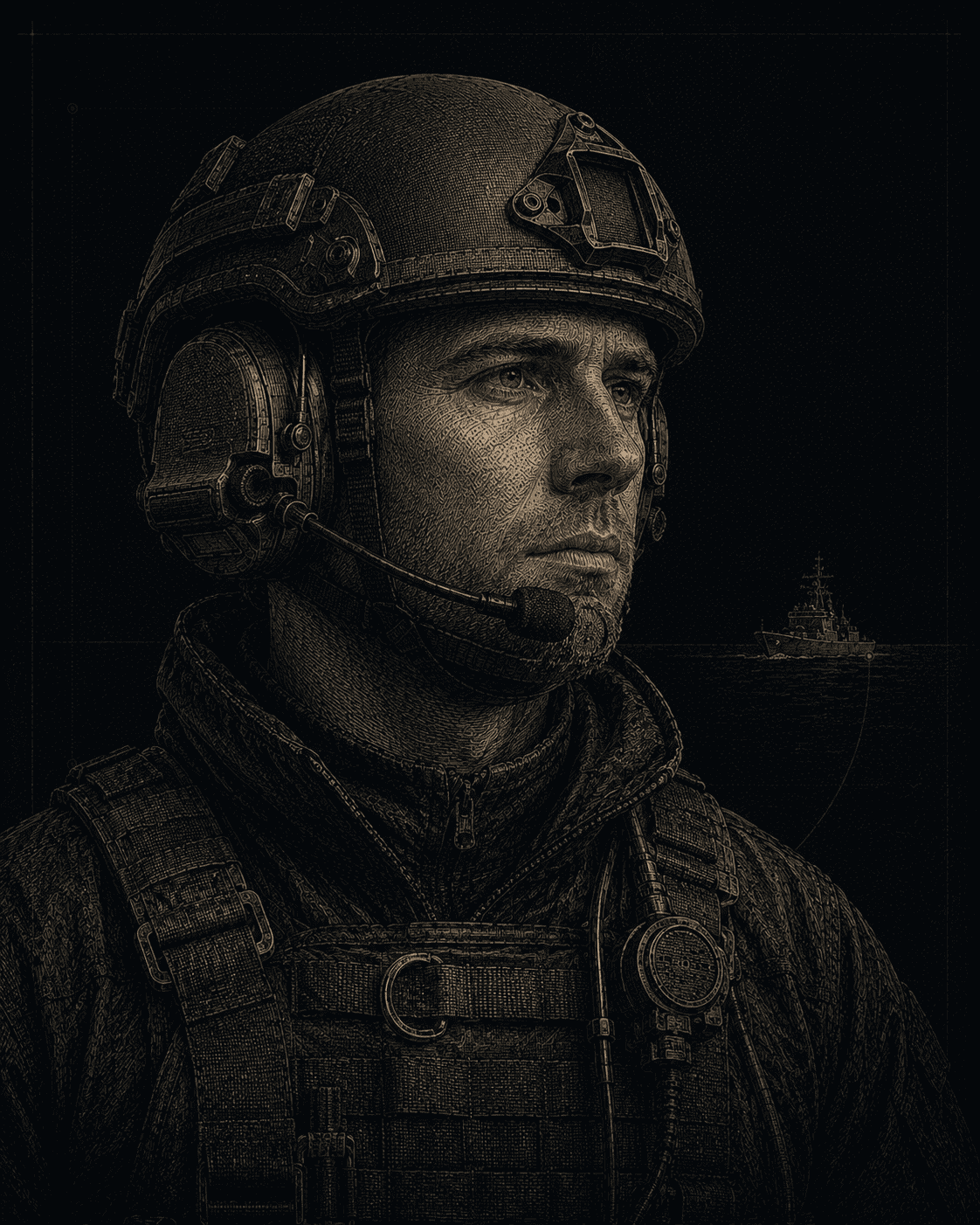
Physiological, neurophysiological, behavioral, workload, and recovery signals are treated as consented readiness-relevant context with quality and validation boundaries.
Simulator, aircraft, scenario, control, feedback, and adapter state remain tied to typed records, policy state, and replayable evidence.
Training condition, mission context, scenario pressure, communication load, protected phase, and policy posture define what the evidence can and cannot mean.
Capability Proof
Align simulator, mission, physiological, neurophysiological, behavioral, communication, environmental, feedback, and outcome streams with source and quality metadata.
Keep AI-assisted outputs and adaptive paths bounded by schema validation, rule compilation, confidence gates, evidence links, protected phases, and human review.
Support research-oriented data capture without claiming medical or readiness certification.
Separate design direction from actual CMMC, RMF, IRB, and ATO approvals.
Prepare review artifacts to carry provenance, confidence, timing, source references, blocked reasons, and standards-compatible export direction.
Support decision makers while avoiding autonomous coaching or certification claims.
Machine Nerve frames defense and readiness work as a trust-first shared-state problem. Human-machine teaming cannot adapt around what it cannot see. Operator context, simulator telemetry, behavioral signals, communication load, scenario state, feedback history, and environmental context can support adaptive training only when evidence quality, policy boundaries, and human review are explicit.
The public category is human-machine performance intelligence for adaptive training: bounded simulator, mission, physiological, neurophysiological, behavioral, communication, environmental, feedback, and outcome data fusion with near-real-time feedback research, post-session analysis, after-action evidence, and compliance-pathway discipline.
High-consequence operators are asked to supervise more automation, digest more machine output, and make faster decisions under load. Traditional training systems can show what happened in the scenario, but they often miss the hidden cognitive and physiological cost of getting there.
Machine Nerve is built around that gap. It aligns machine state, operator context, behavior, communication, environment, feedback history, and scenario pressure so reviewers can study workload, physiological cost, recovery, performance stability, and adaptation opportunity without pretending those signals are simple or clinically definitive.
Trust-first systems show their sources. They preserve timing provenance, quality state, confidence boundaries, blocked reasons, and the path from signal to interpretation. AI-assisted outputs remain bounded by schema validation, rule compilation, evidence links, and human review.
Adaptation should fail closed. If confidence, signal freshness, timing, protected phase, adapter health, or evidence persistence is insufficient, the system should suppress automation and record why.
Every adaptive decision should be reconstructable from source frame to metric to rule evaluation to command to simulator outcome to after-action review. Internal evidence events come first; standards-compatible export is a materialized seam for sponsor or customer systems that require learning-record workflows.
Machine Nerve is designed for local/on-prem operation and future deployment into approved government cloud environments as required by program architecture and compliance constraints. Public language describes design direction and deployment posture; it does not imply Navy approval, ATO, RMF completion, CMMC certification, IRB approval, or validated readiness prediction.
Machine Nerve is designed toward sponsor-specific CMMC, RMF, IRB, and ATO pathways. These approvals are not claimed until the appropriate review, authorization, and human-subjects determinations are complete.
Machine Nerve is not a weapons-targeting system, not an autonomous lethality system, not a clinical diagnostic product, and not a public claim of operational readiness prediction.
Machine Nerve is not a medical device and does not provide clinical diagnosis, treatment, or medical readiness certification. Physiological and neurophysiological signals are used as performance, training, and research context with explicit quality, confidence, and validation boundaries.
Read What Is Human-Machine Performance Intelligence? for the broader signal-layer thesis.
Questions And Answers
These are the questions teams usually ask when they first map Machine Nerve to their environment.
No. The defense page describes design direction and capability posture for defense training environments. Machine Nerve does not claim Navy approval, ATO, RMF completion, CMMC certification, IRB approval, operational deployment, or validated readiness prediction.
Human-machine teaming starts with shared context. Machine Nerve structures what the operator did, what the machine or simulator demanded, what communication and environment signals were present, what feedback was delivered or suppressed, and what changed afterward.
Readiness evidence is a replayable record of performance, workload, recovery, communication, feedback, blocked reasons, and outcome signals. It supports review and research; it is not a medical, operational, or certification-grade readiness verdict.
Machine Nerve is designed for controlled environments: local-first capture, on-prem operation, and deployment patterns that can support approved cloud environments where the customer security and compliance pathway allows.
Physiological and neurophysiological signals are operator-context signals. They can help study workload, physiological cost, recovery, performance stability, and adaptation opportunity, but they remain bounded by consent, quality, validation, and non-medical claim limits.
The platform is designed for manual, AI-assisted, or adaptive feedback inside defined guardrails. Any cue, suppression, escalation, simulator change, or debrief item should be traceable to source evidence, policy state, confidence, protected phase, adapter health, and human review.
Pilot Access
Tell us what operator, machine, and environment signals you need to align.
Discuss Government Use Cases >